


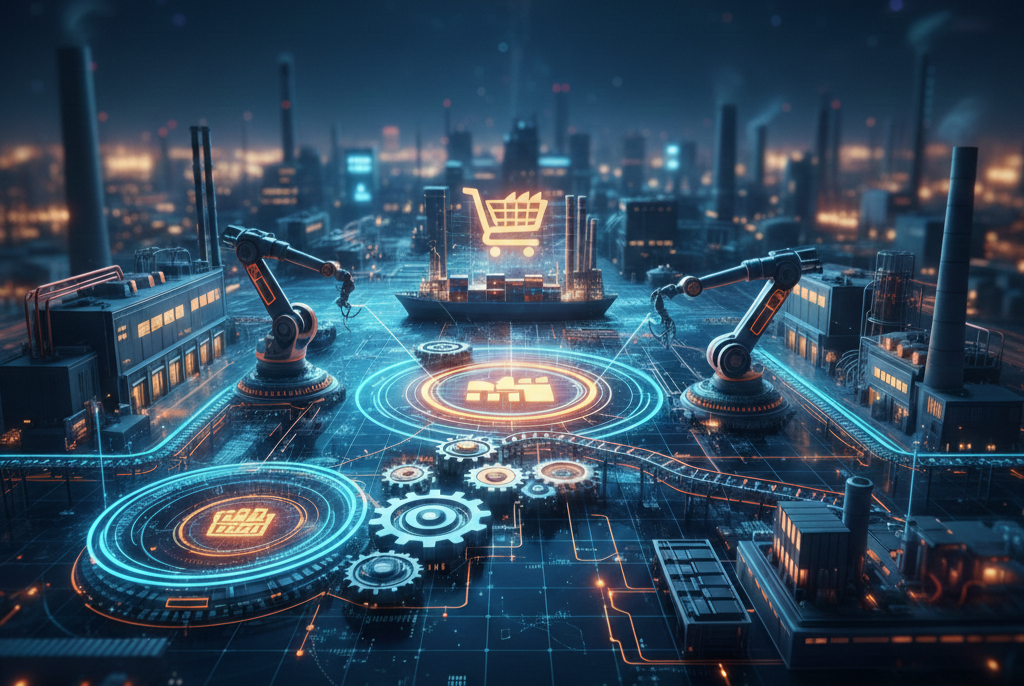
Industrial e-commerce is no longer an experimental side channel. It is becoming the primary infrastructure for manufacturers, OEM suppliers, and distributors to transact, collaborate, and compete.
Engineers expect instant specifications. Procurement leaders expect transparent pricing. Operations teams expect real-time inventory data. And executive leadership expects supply chain resilience—without margin erosion.
The evolution of the B2B marketplace is not about putting a catalog online. It’s about fundamentally rewiring how industrial commerce operates.
Further reading: Future Manufacturing Hubs: What Regions Are Leading in Tech Adoption?
From Catalogs to Platforms
Traditional industrial sales models were relationship-driven, offline, and often opaque. Quotes were manual. Pricing varied. Inventory visibility was limited. Customization required back-and-forth coordination across departments.
Today’s industrial buyers operate differently.
They research suppliers independently, compare options digitally, and expect technical documentation, CAD files, compliance certificates, and shipping estimates before speaking to a salesperson.
The modern industrial e-commerce platform must provide:
- Real-time inventory availability
- Dynamic pricing for bulk purchasing
- Custom configuration tools
- ERP integration
- Automated RFQ workflows
- Secure procurement approval systems
The shift mirrors what consumer commerce experienced a decade ago—but with higher complexity, larger contract values, and far greater operational consequences.
The Rise of the Industrial B2B Marketplace

Unlike consumer marketplaces, industrial platforms must handle technical nuance.
A bolt is not just a bolt. Specifications include tensile strength, coatings, compliance standards, tolerance levels, and environmental ratings. Buyers require filtering at a granular level.
This complexity is why purpose-built industrial B2B marketplace ecosystems are emerging.
Instead of acting solely as storefronts, these platforms now function as:
- Data exchanges
- Supplier discovery engines
- Compliance validation hubs
- Logistics coordination layers
- Financial transaction infrastructure
The competitive advantage no longer lies only in product manufacturing. It lies in digital accessibility and transactional intelligence.
AI-Driven Procurement: From Reactive to Predictive
Artificial intelligence is accelerating this transformation.
In industrial commerce, AI is being applied to:
- Predictive inventory planning
- Automated quote generation
- Demand forecasting
- Price elasticity modeling
- Fraud detection
- Smart supplier matching
Rather than waiting for procurement teams to initiate orders, platforms can now anticipate replenishment needs based on usage patterns and historical consumption.
AI-driven procurement systems are reducing procurement cycle times while improving working capital efficiency.
For Western manufacturers operating across North America and Europe, this shift addresses two major pressures:
- Labor shortages in procurement and operations
- Increased demand volatility across global markets
AI does not replace procurement professionals. It augments them—shifting focus from transactional tasks to strategic supplier management.
The New Competitive Standard in Industrial E-commerce
Customization services are increasingly expected, not optional.
Industrial buyers want configurable products, not fixed SKUs. They want tailored assemblies, not generic components.
Digital platforms now integrate product configurators that allow buyers to:
- Adjust specifications in real time
- Generate instant pricing
- Download technical drawings
- Confirm manufacturability before ordering.
This reduces engineering bottlenecks and shortens time-to-production.
For OEM suppliers, this capability shifts positioning from commodity manufacturer to strategic partner.
Customization is no longer handled through emails and spreadsheets. It is embedded directly into the industrial e-commerce experience.
ERP and Operational Integration

An industrial e-commerce platform cannot operate in isolation.
Modern systems integrate directly with:
- Cloud-based ERP systems
- Warehouse management systems
- Supply chain management software
- Carbon tracking tools
- Compliance databases
This integration transforms e-commerce from a sales channel into an operational infrastructure.
When a buyer places an order, the transaction updates inventory forecasts, production scheduling, financial projections, and shipping coordination simultaneously.
Disconnected systems create friction. Integrated commerce creates competitive speed.
Bulk Purchasing and Smart Pricing Models
Bulk purchasing industrial products remains core to B2B commerce—but pricing strategies are evolving.
Static volume discount tiers are being replaced by:
- Dynamic pricing based on demand fluctuations
- Contract-specific pricing agreements
- Loyalty-based pricing models
- AI-driven margin optimization
This is particularly relevant for manufacturers balancing inflationary raw material costs and competitive pricing pressure.
The industrial e-commerce platform becomes a pricing intelligence engine—not just a digital catalog.
Nearshoring and Marketplace Expansion
As Western companies diversify supply chains and explore nearshoring manufacturing strategies, digital marketplaces play a central role.
Instead of building new supplier networks from scratch, buyers increasingly use online platforms to discover regional OEM suppliers and turnkey manufacturing solutions.
Industrial marketplaces reduce the friction of cross-border procurement by providing:
- Supplier performance ratings
- Certification documentation
- Standardized compliance verification
- Logistics coordination
In a risk-sensitive global environment, digital transparency becomes a strategic asset.
The Human Element in Industrial E-commerce Isn’t Disappearing

Despite automation and AI integration, relationships still matter.
Industrial transactions often involve large contracts, long-term supply agreements, and collaborative engineering efforts.
The difference is that the relationship now begins digitally.
Buyers arrive informed. They evaluate vendors through content, product data, and digital experience before initiating contact.
This changes how manufacturers should think about:
- Product page depth
- Technical documentation strategy
- Thought leadership content
- Case studies
- Transparent communication
Industrial e-commerce evolution is not about removing sales teams. It’s about equipping them with better-qualified, digitally educated buyers.
Data as the New Industrial Asset
Every transaction generates intelligence.
- Which SKUs are frequently bundled
- Seasonal ordering trends
- Regional demand shifts
- Customization frequency
- Price sensitivity patterns
Manufacturers that treat this data strategically can optimize production planning, improve forecasting accuracy, and refine go-to-market strategies.
Industrial e-commerce is not merely transactional. It is an analytical infrastructure.
Strategic Implications for Western Manufacturers
For Western B2B leaders, the implications are clear:
- Digital commerce is no longer optional
- Platform sophistication determines competitiveness
- AI integration drives operational efficiency
- Customization capabilities influence supplier selection
- Data strategy defines long-term resilience
Manufacturers that delay investment risk being commoditized within larger marketplaces.
Those that embrace platform-driven commerce can control pricing power, strengthen OEM partnerships, and enhance supply chain visibility.
Frequently Asked Questions in Industrial E-commerce
What is industrial e-commerce?
Industrial e-commerce refers to the digital buying and selling of industrial goods, components, and services through online platforms, including B2B marketplaces and manufacturer-operated portals. It integrates procurement workflows, ERP systems, logistics tracking, and compliance documentation.
How is a B2B marketplace different from a traditional distributor?
A B2B marketplace operates as a digital ecosystem connecting multiple suppliers and buyers, often providing AI-driven search, automated quoting, and real-time pricing. Traditional distributors typically operate with manual sales processes and limited digital infrastructure.
How does AI improve industrial procurement?
AI improves procurement by enabling predictive demand forecasting, automated RFQ generation, dynamic pricing models, fraud detection, and supplier matching. This reduces procurement cycle times and enhances supply chain resilience.
Why is customization important in industrial e-commerce?
Customization services allow buyers to configure products to precise specifications, reducing engineering friction and production delays. Platforms with built-in configurators provide a competitive advantage in OEM partnerships.
What role does ERP integration play in industrial e-commerce?
ERP integration ensures that online transactions automatically update inventory management, production planning, financial reporting, and supply chain coordination, transforming e-commerce into operational infrastructure.
Summary
Industrial e-commerce evolution is not about copying consumer retail models. It is about building intelligent, integrated commerce ecosystems tailored to technical complexity and operational scale.
The winners in this transformation will not simply be manufacturers with strong production capabilities. They will be manufacturers who understand that digital platforms are now central to industrial strategy.
Commerce has become infrastructure. And infrastructure determines who leads the next decade of manufacturing.
Further reading: Smart Factories 4.0: How AI and IoT Are Rewiring Global Manufacturing


