


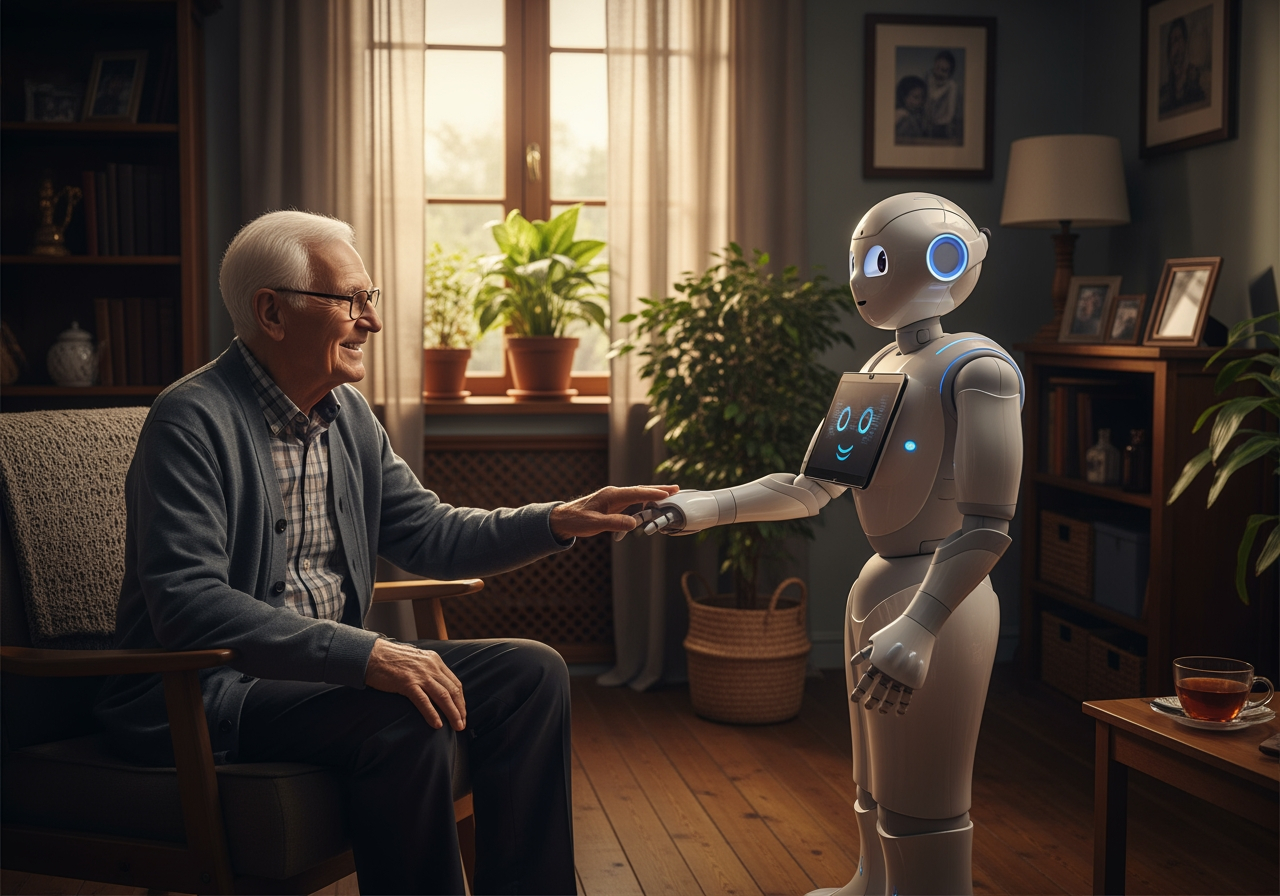
In a world where millions of older adults live alone, and social isolation is being flagged as a major health crisis, a new kind of support is quietly but steadily gaining traction: the robot companion.
Forget the dramatic, laser-wielding sci-fi humanoids you have seen on screen. The reality of social robotics is far quieter, kinder, and smarter. These dedicated devices are aimed at addressing one of society’s most persistent and painful challenges: loneliness and mental well-being.
Why Loneliness Is a Global Health Crisis

Living alone means more than just having some extra space. For many, it translates to fewer meaningful conversations, a reduction in vital social routines, and a dangerously increased health risk.
The data makes the link undeniable: loneliness is not just a “feel-bad” state, but a serious health threat:
- Loneliness and social isolation have been linked to higher rates of depression, accelerated cognitive decline, and significantly increased healthcare costs. The U.S. Surgeon General, Dr. Vivek H. Murthy, has even warned that “the impact of being socially disconnected is similar to that caused by smoking up to 15 cigarettes a day.“
- According to an article by the makers of the robot ElliQ, approximately one-third of older adults living outside care homes live by themselves, making them highly vulnerable to these risks. The World Health Organization (WHO) emphasizes that “loneliness and social isolation are key risk factors for mental health conditions in later life.“
For B2B professionals exploring the home-care, smart-home, and aging-in-place markets, this is the crucial signal to start acting! There is a growing demand for devices that perform physical tasks and for solutions that support emotional and mental wellness.
This is where the ability to “connect, accompany, and converse” becomes a purposeful opportunity to invest in conquering loneliness!
What Are Social Robots? An Easy Explanation
A social robot is simply a machine designed to interact socially with you: to talk, respond, remember, and truly engage.
Crucially, they don’t just follow a predefined path like a vacuum cleaner. Instead, they leverage sophisticated AI to initiate interaction, anticipate basic needs, and prompt conversation. This is driven by several key capabilities:
- Through advanced Natural Language Processing (NLP), they can hold a coherent dialogue, asking things like, “How are you today?” or “Tell me about your afternoon.” (Source: Dex-Lab)
- They function as a helpful, gentle presence, prompting users for important daily routines. (Source: WBCOM Designs)
- These robots are built to learn. They observe user preferences, remember habits, and adapt their tone and interaction style over time. (Source: RobotLab)
- While they certainly aren’t sentient, their ability to sustain interaction and respond to verbal cues offers a powerful sense of companionship. (Source: Dex-Lab)
Ultimately, social robots aim to serve as a reliable anchor in the lives of those aging in place.
Case Study: ElliQ – The Robot Designed to Reduce Loneliness
The best way to understand the potential of this field is through a leading example: the ElliQ companion robot. Designed by Intuition Robotics specifically for older adults living independently, ElliQ is not a passive assistant. It uses voice, motion, a small screen, and proactive AI to engage users, making it feel less like a gadget and more like a proactive roommate.
It asks about the user’s day, prompts them to stay hydrated, suggests calling a family member, or even offers a guided exercise session. This technology beautifully blends companionship with light wellness coaching.
Real-World Impact: The Loneliness Breakthrough
The results from real-world deployments are startling. In a major pilot program run by the New York State Office for the Aging (NYSOFA), older adults using ElliQ reported a remarkable 95% reduction in self-reported loneliness. (Source: Office for the Aging)
This high level of engagement proves that social robots are not mere gimmicks. They deliver regular, consistent interaction, especially for isolated users. One older adult user described the feeling of having this presence in his home, noting how the robot provides a constant, friendly check-in: “When I get up in the morning, she’ll say ‘Good Morning, hon, how are you?”. This effectively bridges the painful gap of social isolation.
Why This Matters
ElliQ demonstrates the potential for social robots to become a powerful, scalable tool in public health and elder care. It shifts the focus from simple task automation to genuine emotional and mental well-being support.
How Social Robots Boost Mental Well-Being

Let’s break down the practical mechanisms behind social robots. How, exactly, do devices like ElliQ and others improve the mental health, engagement, and overall well-being of older adults?
1. Regular Interaction and Cognitive Stimulation
Humans are social creatures, and even brief, regular conversations are vital to well-being. For someone who sees few people daily, a robot that initiates five minutes of chat, asks about their favorite memory, or suggests a piece of music can truly “light up” the day. This sense of consistent presence creates a profound feeling of being attended to. In fact, one study of single older adult participants reported a “comforting presence,” a “meaningful connection,” and, surprisingly, even a preference for the robot over a pet. (Source: JMIR Publications)
2. Habit and Routine Reinforcement
Irregular routines (around sleep, activity, or meals) often contribute to poor mental health. Social robots are gentle, non-judgmental accountability partners. They offer light, proactive prompts like: “Time for your daily walk,” or “Would you like to call your granddaughter now?” These consistent check-ins reinforce structure and healthy habits, directly improving psychological well-being.
3. Emotional Validation and Presence
A social robot never replaces a human connection, but it serves a crucial function: it listens and acknowledges. This act of being heard, in itself, holds immense value. Users of companion robots often describe them as “someone who asks how I feel” and “a friend I don’t have to maintain”. They offer unconditional acceptance, allowing users to express feelings and concerns without the fear of judgment or the feeling of being a burden.
4. Fostering Cognitive Engagement
Many companion devices incorporate activities like memory quizzes, trivia games, or storytelling. It’s designed not just for entertainment, but also for cognitive training. By encouraging the user to engage, respond, and think, these interactions help maintain vital cognitive function, keeping the mind sharp and focused, which, in turn, has a positive effect on overall mood and psychological health.
Addressing Concerns: Ethics, Privacy, and Realistic Expectations
No technology is perfect, and when the stakes involve the emotional and mental well-being of older adults, the discussion must be grounded in reality. While social robots offer immense potential, several key concerns must be addressed:
The Ethical Dilemma: Data and False Friendship
The most critical concerns revolve around privacy and ethics. Companion robots are embedded in the home, often collecting sensitive information about interaction, behavior, and sometimes even physiological data. Studies show that perceived risk reduces adoption, highlighting the need for manufacturers to provide users, particularly older adults, with clear, transparent control over their data. (Source: MDPI)
Furthermore, there is the ethical question of the “illusion of friendship.” Should a robot behave like a friend? A significant percentage of older adults (almost 69%) surveyed even expressed skepticism that an artificial companion could genuinely make them feel less lonely. (Source: PubMed Central) The debate is clear: social robots are intended to supplement care, not supplant human interaction or professional support. They serve as a vital support tool for managing isolation, but they are not a cure for complex emotional or health challenges.
Limitations and Practical Hurdles
Adoption not only depends on reducing privacy risks, but relies equally on setting realistic expectations and delivering reliable technology. If a robot is too complex to set up or if it frequently fails to respond (which is a common technical hurdle) user acceptance will drop immediately. Social robots must be usable, reliable, and, importantly, affordable to achieve mass success.
Design Philosophy: What Research Recommends
To overcome these hurdles and maximize the benefits, research has established clear design principles for companion robots aimed at older users. They must be developed to:
- Engage Actively and Passively: The robot should initiate conversations and prompts, but also listen and offer a quiet presence when needed.
- Personalize Interactions: The device must learn user habits and adapt conversations to maintain engagement and relevance.
- Prioritize Control: Users must have simple, clear controls over data collection and privacy settings.
- Support Wellness: The robot needs to reliably offer gentle daily reminders (medication, hydration) and provide consistent emotional connection.
By focusing on ethics, transparency, and human-centric design, social robotics can safely and effectively move from promising technology to essential support.
What’s Next? The Future of Social Robotics

The domain of robot companions is still relatively young, but the technological and demographic trends point toward strong, rapid growth:
1. More Natural, Emotional Interaction
The future of the companion robot route is shifting firmly toward Emotional AI. Forget static programming, because future robots will be far better at recognizing user mood, understanding natural speech patterns (including context and tone), and evolving their personality and conversation style over months and years. This deep learning capacity will make the interactions feel far more genuine and meaningful.
2. Full Integration into Care Ecosystems
The companion robot is quickly becoming a true “care companion” and data hub. Imagine a robot that not only chats with you but also passively monitors your sleep patterns, uses its internal sensors to detect subtle changes in mobility (like a slow gait), and automatically alerts designated caregivers or family members if an issue is detected. This shift is already starting: devices like ElliQ are integrating caregiver monitoring apps, turning a simple conversational tool into a comprehensive, proactive elder-care hub. (Source: The Verge)
3. Lower Cost and Greater Scale
As the aging population grows globally (a major trend in Japan, Europe, and the U.S.), the volume and use cases for social robots will increase dramatically. This scaling will drive down hardware costs and increase computing power. Expect to see the rise of more renter and subscription models (Robotics-as-a-Service, or RaaS), making these devices affordable and accessible to a much broader public.
4. New Business Models for B2B
For business professionals, this evolution opens vast opportunities:
- RaaS & Subscription Care: Offering robots and maintenance via subscriptions, rather than a single purchase, to provide continuous revenue.
- Ecosystem Partnerships: Creating compelling offerings by partnering across sector, e.g. combining sensor technology from companies like Omron, with robot manufacturers, and established home-care agencies to offer a holistic service package.
- Data-Driven Services: Building specialized services around the aggregated, anonymized behavioral and health data collected by the robotic fleet.
Final Conclusion and Next Steps
Living alone or with limited social contact is one of modern society’s most persistent challenges, especially for older adults. While social robots will never replace genuine human connection, these robot companions offer a vital, accessible extra layer of engagement: a proactive prompt, a friendly chat, and a consistent presence.
If you were intrigued by how functional consumer robotics are entering daily home life (like cleaning robots and smart-home bots), be sure to read our earlier piece on consumer robotics solutions. The companion-robot wave is the next logical step: a shift from task-completion to emotional support.
Whether you’re a homeowner considering a companion robot for a loved one, or a business professional building smart-home or care services, now is the ideal time to explore how social robots can play a meaningful and strategic role in mental wellbeing, aging-in-place, and connected living.
Have you considered how a robot companion might fit into your home, your business service, or your care model? Leave a comment below and tell us: What feature would you want the robot to have (talking, reminders, mood detection, video-calls)? Also, to stay on top of this rapidly evolving field, be sure to check out our other articles on GetGoldys. We’ll cover the latest in social robots, home automation, and smart-care tech.
FAQ – Frequently Asked Questions
Q1: Are social robots safe for older people to use?
Yes. Leading companion robots are designed with elderly usability in mind (e.g., large interfaces, voice control, simple setup) and follow established privacy and safety protocols. But of course it’s always wise to review the vendor’s security and data policy.
Q2: How much do companion robots cost?
Costs vary greatly. Some pilot programs (like those for ElliQ) have involved subscription fees. As the market scales and manufacturing volumes increase, prices are generally expected to drop, and more flexible service models will emerge.
Q3: Do these robots replace human caregivers or family members?
No. Social robots are supplements, not replacements. They are designed to provide consistent, low-effort interaction and prompts, but human engagement remains crucial for deep connection and complex needs.
Q4: Are there scientific studies proving they reduce loneliness?
Yes. Initial studies have shown promising results. For example, a study of the robot LOVOT found that older adults reported increased comfort and a sense of meaningful connection. Likewise, a study of ElliQ showed high engagement and reported wellness improvements.
Q5: What are the concerns I should consider before adopting one?
Key concerns include data privacy, ensuring the user interface is not too complex for the user, maintaining realistic expectations (the robot won’t solve all social needs), factoring in cost and maintenance, and making sure the robot complements rather than replaces necessary human interaction.


