


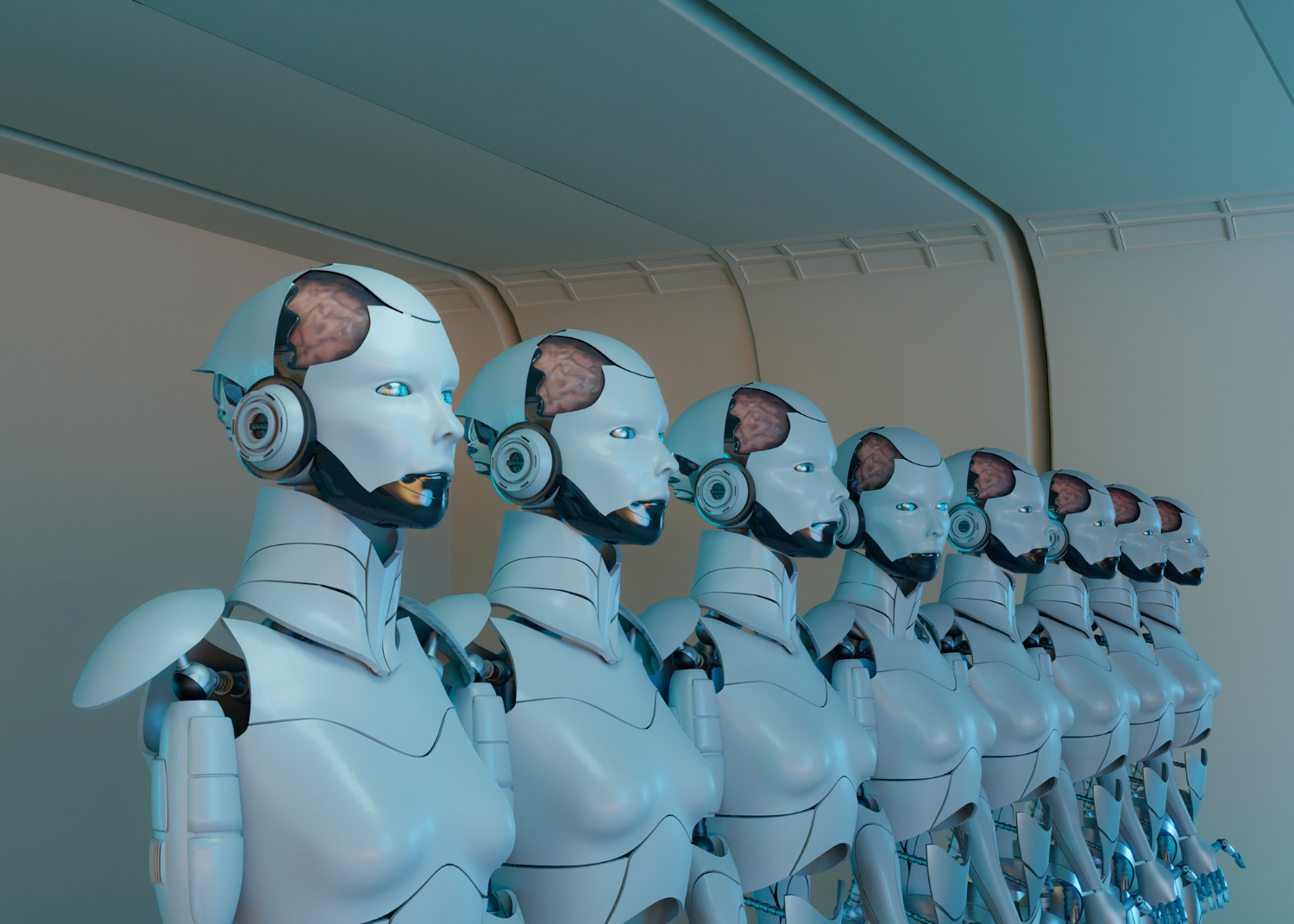
For years, the world’s biggest robotics showcases followed a reliable script: humanoid robots walked across stages, danced for cameras, did push-ups, and then went back into development labs while the industry quietly acknowledged that the gap between demonstration and deployment remained wide. The spectacle was real. The commercial readiness was not.
The 2026 World Robot Conference, which ran from August 19 to 23 in Beijing, marked the point at which that script was retired. The shift on this year’s show floor was not the number of humanoid robots — though that set records — it was that robots were working on site. Making coffee. Sorting parcels faster than a human picker. Handling pharmaceutical inventory. Depalletizing industrial loads. Folding laundry in a hotel pilot program. The machines were not performing. They were operating, and the industry watching them understood the difference.
The WRC has become the most important annual barometer of where global robotics actually stands, and what Beijing showed in August 2026 was a sector crossing a threshold: from small-batch trials and R&D settings into the early stages of mass commercialization. For manufacturers, logistics operators, and industrial businesses anywhere in the world, the implications extend well beyond China’s borders.
Further Reading: The AI Is Ready. The Robot Isn’t. Why Hardware Is Now Robotics’ Biggest Challenge
The Numbers Behind the Shift
The scale of WRC 2026 was itself a statement. The conference drew more than 300 exhibitors from 26 countries — up 36 to 69% from the previous year depending on the metric — filling 52,000 square meters across four exhibition halls. More than 3,000 products were on display, with over 150 making their global debut. Among the attendees were 49 centrally administered Chinese state-owned enterprises, arriving not to exhibit but to procure, bringing 12 real-world engineering scenarios across power grids, aerospace, mining, metallurgy, and other sectors in active search of robotics solutions. The customers had come to the floor, which is a different kind of signal than the vendors simply arriving to show.
The production numbers are equally striking. China shipped more than 40,000 humanoid robots in the first half of 2026 alone, accounting for approximately 97% of global humanoid shipments, according to the 2026 Humanoid Robot Industry Development Report released at the conference. AgiBot has reached 15,000 cumulative units produced. Figure AI’s Figure 03 crossed 1,000 units in production at BotQ’s facility at a sustained rate of one robot per hour. Boston Dynamics’ electric Atlas has its entire 2026 production run fully committed to Hyundai and Google DeepMind deployments. Tesla’s Optimus Gen 3 is in low-volume production ramp at its converted Fremont line.
These are manufacturing numbers, not prototype numbers. And they are arriving at a moment when the policy environment in China is explicitly designed to accelerate them further — with Beijing listing embodied AI as a national priority in the 15th Five-Year Plan, directing local governments to subsidize startups and ordering banks to extend favorable lending terms to humanoid robotics companies.
From Spectacle to Specification
The most significant development at WRC 2026 was not any individual product launch. It was the change in what exhibitors chose to demonstrate and how they chose to present it.
In previous years, robotics exhibitions were dominated by choreographed novelty demonstrations — robots walking, running, performing athletic feats — that left serious industrial buyers with questions about whether any of it was commercially viable outside a controlled showcase environment. WRC 2026 moved decisively away from that format. Exhibitors emphasized practical demonstrations over attention-grabbing stunts. Wheeled, articulated, and humanoid robots were increasingly presented in terms of specific jobs, specific throughput metrics, and specific deployment scenarios.
X Square Robot demonstrated a parcel-sorting capacity exceeding 1,800 parcels per hour using dual robotic arms — higher than the human benchmark of 1,200 to 1,400 parcels per hour. Galbot showed its S1 robots already deployed at CATL, Bosch, and multiple automotive manufacturers, handling industrial depalletizing at payloads up to 50 kilograms and managing pharmaceutical pick operations for online orders. Firefighting humanoid robots demonstrated autonomous fire source identification, extinguisher operation, and simulated suppression tasks. A hotel laundry scenario involving humanoid robots folding clothes is in proof-of-concept testing with a major hotel chain.
The theme of the conference — “Human-Robot Symbiosis, Production Demand Convergence” — was not marketing language. It described what was actually on the floor: machines being presented as tools for jobs that need doing, alongside the operators and procurement teams who need them done.
The Unitree IPO: A Market Milestone
The timing of the conference coincided with an event that gave the week additional financial significance. Unitree Robotics debuted on China’s STAR Market during WRC week, with shares surging between 460% and 629% on the opening day, pushing the company’s peak market capitalization above RMB 400 billion — approximately $59.4 billion US dollars.
Unitree is already a volume leader in humanoid robotics, having shipped more than 5,500 humanoid units in 2025 and targeting between 10,000 and 20,000 units in 2026 with global model rollouts. The IPO’s reception signals something important about investor expectations: the market is treating humanoid robotics not as a speculative future bet but as a present-tense industrial category with near-term revenue and scaling capacity.
That is a meaningful repricing of risk. For years, humanoid robotics investment was structured around long-horizon bets on transformative capability. The Unitree debut suggests at least one major public market has begun treating the sector with the valuation logic applied to scaling hardware manufacturers rather than pre-revenue deep technology ventures.
The US-China Robotics Race
WRC 2026 crystallized something that the International Federation of Robotics has been tracking for several years: China’s robotics sector has moved from catching up with established industrial robot markets to defining the pace and direction of the humanoid segment specifically.
The 97% share of global humanoid shipments is not simply a manufacturing statistic. It reflects a combination of deliberate policy support, a dense domestic supply chain for actuators and sensors, massive domestic demand from labor-intensive industries facing demographic pressure, and a willingness to deploy at commercial scale before every technical question is resolved.
The US response has not been passive. New regulations affecting foreign mobile robots on national security grounds — covering remote access, data storage, and country of origin for robotics systems deployed in sensitive environments — signal that the geopolitical dimension of the robotics race is hardening alongside the commercial one. American companies including Figure AI, Agility Robotics, Apptronik, and Boston Dynamics are all advancing deployments, and the CHIPS Act-era policy logic is beginning to extend toward robotics hardware and supply chains.
For industrial operators outside both countries, this competition is simultaneously a risk and an opportunity. The speed of development is accelerating on both sides of the race. Pricing is declining faster than it would in a less competitive environment. And the range of available platforms — at different price points, capability levels, and regulatory profiles — is expanding in ways that give buyers genuine options rather than a single viable vendor.
What Changes Now for Industrial Operators
The transition from demonstration to deployment shifts the relevant questions for any industrial operator evaluating humanoid robotics from “is this technology real?” to “is it right for my operation, at what cost, and on what timeline?”
Those are answerable questions now in ways they were not two years ago, and the answers are increasingly specific. Logistics sorting and parcel handling have crossed the performance threshold relative to human labor in controlled environments. Pharmaceutical pick-and-pack is in active commercial deployment. Industrial depalletizing and materials handling are live at CATL and Bosch. The household and hotel scenarios are in proof-of-concept rather than production, reflecting the continued difficulty of unstructured domestic environments compared to the relatively predictable geometries of a factory floor or fulfillment center.
The cost curve is also moving. As AgiBot and Unitree scale toward tens of thousands of units, the component pricing for actuators, sensors, and power management systems — historically the biggest cost driver in humanoid hardware — is beginning to decline in ways that make broader industrial deployment viable at lower volumes than the technology’s early economics suggested.
The practical planning horizon for industrial operators watching this space has compressed. What looked like a 2030 question in early 2025 looks more like a 2027 to 2028 decision for many applications — and for some logistics and manufacturing scenarios, the deployment-ready window is now.
Frequently Asked Questions
Q: What is the World Robot Conference and why does it matter globally?
The WRC is an annual event held in Beijing, co-hosted by the Chinese Institute of Electronics and the World Robot Cooperation Organization. It has become the most significant annual showcase for global robotics development, particularly for humanoid and industrial robots. It matters globally because it reflects the state of the industry’s largest production ecosystem — China — and because the deployment scenarios, product debuts, and procurement activity at the conference set the commercial direction for the coming year across the global supply chain.
Q: Why does China account for 97% of global humanoid robot shipments?
The concentration reflects several compounding factors: deliberate national policy support that funds startups and directs favorable lending to humanoid robotics companies, a mature domestic supply chain for key components including actuators, sensors, and battery systems, massive domestic demand from manufacturing and logistics sectors facing severe labor shortages due to demographic decline, and a development culture willing to deploy at commercial scale while technical refinement continues. Western companies are developing competitive platforms but are not yet matching Chinese manufacturers on production volume or deployment scale.
Q: How does the Unitree IPO affect the global robotics investment landscape?
The IPO’s exceptional market reception — shares surging several hundred percent on debut — signals that at least one major public market has repriced humanoid robotics from a speculative deep technology bet to a scaling hardware manufacturer category. This matters because it affects how other investors globally evaluate humanoid robotics companies, how much capital flows into the sector, and how quickly competing platforms can fund their development and manufacturing scale-up. A strong public market debut by a volume robotics manufacturer tends to raise valuations and unlock funding across the entire category.
Q: Are humanoid robots ready for deployment in Western manufacturing facilities now?
For specific, well-defined applications — logistics sorting, materials handling, depalletizing, pharmaceutical pick operations — the answer is increasingly yes, particularly if the operator has the systems integration capability to incorporate the robot into existing workflows and the willingness to manage an early-deployment learning curve. For complex assembly, unstructured environments, or tasks requiring significant manipulation dexterity, the technology is advancing but not yet at the reliability threshold most operators require for production-critical deployment. The honest answer is application-specific rather than categorical.
Q: What are the security and regulatory considerations when evaluating Chinese-manufactured robots?
This is a genuine and evolving area of concern. The US has introduced new rules affecting foreign mobile robots on national security grounds, covering remote access capabilities, data storage practices, and country-of-origin requirements — particularly for deployments in sensitive or critical infrastructure environments. Industrial operators outside the defense and critical infrastructure sectors face fewer immediate regulatory constraints but should evaluate vendor data practices, remote access architecture, and long-term supply chain resilience as part of any procurement decision. The regulatory picture is likely to tighten across multiple jurisdictions over the next several years.
The Bottom Line
WRC 2026 was not another robotics conference where impressive machines did impressive things and then returned to development. It was the year the industry showed up with products deployed in real facilities, procurement teams with real specifications, and a market debut that valued a production-scale humanoid manufacturer at tens of billions of dollars.
The transition from speculative technology to industrial infrastructure is underway. It is happening faster in China than anywhere else, but the commercial pressure it creates — and the platform options it generates — extends to industrial operators everywhere. For businesses evaluating where robotics fits in their operational planning, the question has moved from if to when, and in a growing number of applications, when is arriving ahead of schedule.
Continue Exploring: Robotics ROI: Measuring the Real Business Value of Automation


